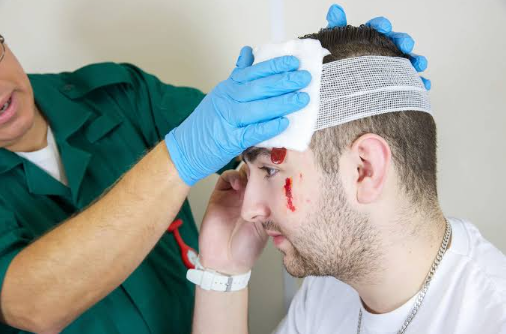
The hard hat held. The hard hat did its job, and the framer under it still called an accident injury lawyer ogden ut six weeks later. The hard hat was never the whole story. A dropped cordless drill does not need to crack the shell to rattle what sits under it. These are field notes from the eighteen months after one struck-by injury on a framing crew. A head injury and an injury claim run on different clocks. Closing the claim on the faster clock costs a worker earning years he has not worked yet.
What A Head Injury Looks Like On Site
It rarely looks like anythiSymptoms Crews Tend To Shrug Off
The symptoms that matter most on a framing crew read as a bad attitude. He lost words in the middle of sentences. He could not hold a cut list in his head past the second measurement. By Thursday afternoon his brain was running on fumes. The case we see most often is a worker who reports nothing for two weeks, then reports everything at once.
WorkCompWire covered NCCI’s State of the Line in May 2026, which put the 2025 workers’ compensation combined ratio at 91 and lost-time claim frequency down another 2%. A healthy insurance line is not the same thing as a fast answer for one hurt framer. Fewer claims still cost more per claim, and a brain injury sits at the expensive end. How many jobsite head impacts never get reported at all? I do not know. Nobody I trust has a number, and the surveys that circulate only count workers who already filed.
See also: The Role of Low-Profile Raised Flooring in Sustainable Office Upgrades
Then Versus Now In Brain Injury Claims
Ten years ago, a mild traumatic brain injury with a clean CT scan was a miserable file. Imaging came back normal, the worker looked healthy at his deposition, and the argument came down to belief. Adjusters leaned on that gap, and so did defense counsel.
The record gets built differently now, out of neuropsychological testing, return-to-work notes, and the accommodations a foreman quietly made in month two. An accident injury lawyer Ogden UT crews recommend will often start with the site logs rather than the MRI. What has not changed is that the rules vary by state. How a workers’ compensation claim interacts with a third-party claim against an equipment owner depends on the facts and on local law. Ask a lawyer licensed in that state instead of a forum post.
A Recovery Timeline Nobody Warns You About
The first week is dull and dark: no screens, short walks, and people telling him he looks fine. He tried a half day in week two and lasted three hours before the noise won. By month three the picture usually splits, and his did. Better at conversation, still unable to read a set of plans without losing the thread. Somewhere after that, the gains got small enough that nobody celebrated them. Within 18 months he was back on site in a different role, at a different wage.
Money follows that curve, and it follows unevenly. Say his framing wage runs around $31 an hour with summer overtime, a plausible figure for a commercial crew rather than a promise. Eighteen months of partial work is not eighteen months of missing pay. It is a patchwork of light duty, unpaid days, and mileage to appointments nobody reimburses. The question that decides a serious claim is whether a 35-year-old still has thirty years of framing in him.
Questions Injured Workers Keep Asking
Do I still have to report it if I finished the shift?
Report it in writing, the same day if you can manage it. A late report does not sink a claim by itself, but it hands the other side an argument. Memory of that morning fades fastest in the cases where memory is the injury. Tell the treating doctor plainly that the impact happened at work, because that sentence ties the record to the jobsite.
How long until I know if I am back to normal?
Longer than anyone tells you at discharge. Recovery curves for serious injuries tend to front-load, which is why the six-month mark draws attention. A critical review of hip-fracture outcomes in BMC Geriatrics found that only 40 to 60 percent of patients recover their pre-fracture level of mobility within a year. That review is about hips and an older population, so it forecasts nothing about one framer’s head.
Should I settle while symptoms are still changing?
Bring that one to a lawyer before anybody signs anything. The worry people raise most is that a closed claim is hard to revisit when a cost turns up in year two. Rules on reopening vary by state. Get the answer for the state where you were hurt, from someone who has read the file.
What The Long View Teaches
Eighteen months on, the framer works. He runs layout and cuts instead of full days of production framing. He keeps a note on his phone for the things he used to hold in his head. The lesson out of that file is unglamorous: get evaluated the day it happens, and write down what you cannot remember. Let the medical picture finish forming before anyone decides what the injury was worth. A claim built on a two-week snapshot will undercount the year that follows.