Most professionals have attended a training session where the data and power cables quickly became trip hazards, or a high-stakes boardroom presentation derailed by tangled wiring and inflexible tech setups. In today’s hybrid, technology-driven world, learning and meeting spaces must evolve quickly in response to shifting markets and staffing levels, while minimizing downtime and reconfiguration costs.
Facility managers feel this tension constantly. A training room booked for a vendor certification course on Monday needs to host a board-level strategy session by Friday, and the room rarely cooperates. Power strips get taped to the floor. AV carts get rolled in and parked wherever an outlet is available. None of it looks intentional, and none of it holds up as the pace of technological change accelerates.
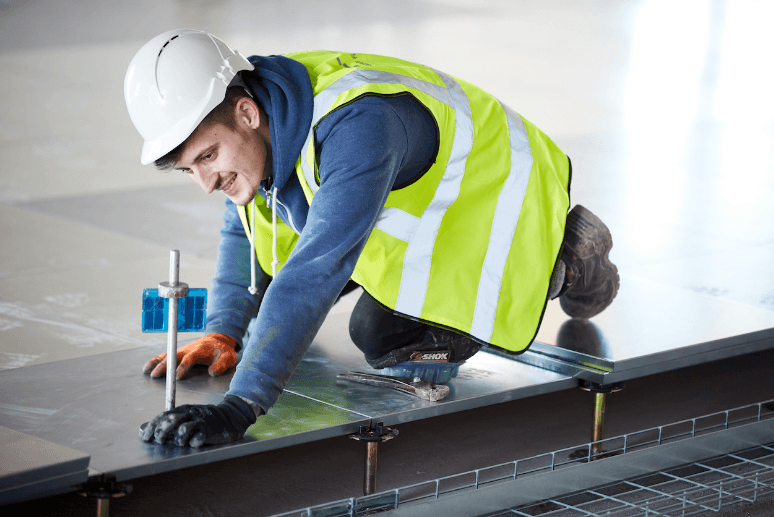
Low-profile raised floors (typically 1.6–2.75 inches high) offer a discreet, modular solution that conceals power, data, and AV cabling beneath the floor while preserving ceiling height and room aesthetics. Instead of retrofitting a room around its outlets, the room can be reconfigured around its purpose, and the infrastructure simply follows.
What Is a Low Profile Raised Floor, Really?
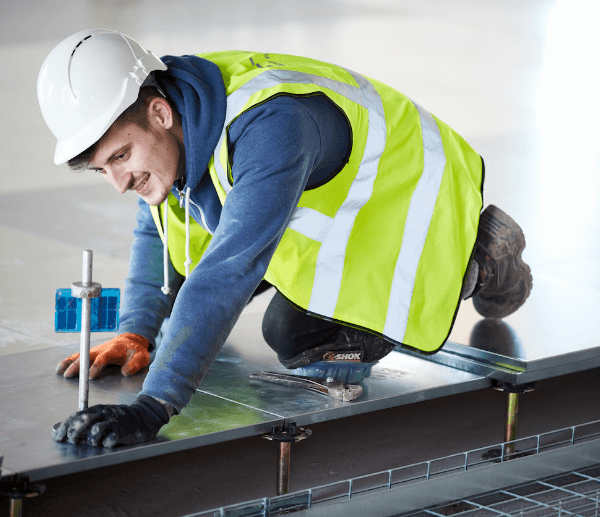
Unlike traditional raised floors designed for improved airflow, low-profile systems, such as the Gridd® Adaptive Cabling Distribution System®, are engineered specifically for the organized routing of electrical, data, AV, and low-voltage cables. At just 1.6″–2.75″ high, Gridd installs quickly with minimal disruption, works equally well in retrofits and new builds, and supports durable modular floor finishes like carpet tiles or Luxury Vinyl Tile (LVT).
Gridd’s easy access makes changes simple without specialized tools or on-site contractors. A facilities team can lift a tile[1] , reroute a data line, and set the tile back down in minutes; the kind of change that would otherwise require an electrician, a work order, and a room taken offline for a day.
Gridd offers three load-bearing capacities (ranging from 100 to 650 pounds per square foot) that can easily handle furniture, AV carts, and other equipment, so the floor performs as well as it conceals. The result is a raised flooring system that behaves like infrastructure rather than decoration: it carries real loads, routes real cabling, and withstands the daily wear of any high-traffic meeting or training space.
Why Learning and Meeting Spaces Have Outgrown Traditional Flooring
Learning and meeting environments have shifted dramatically, from static, lecture-style rooms to dynamic, tech-rich hybrid spaces. Today’s rooms must support interactive displays, video conferencing, charging stations, IoT sensors, and whatever office technology comes next. A decade ago, a training room needed a projector and a phone line. Now it needs redundant network drops, power for a dozen personal devices, and AV infrastructure that can support a remote audience as easily as it can a room audience.
Traditional flooring simply can’t keep up. Fixed outlets limit flexibility, visible cables create safety and aesthetic problems, and any upgrade typically means costly, disruptive renovation. For example, tearing into walls or ceilings just to move a single power drop or network connection. Even a modest change, like relocating a conference table or adding a second display, can turn into a multi-week project involving electricians, permits, and a room that’s unusable in the meantime.
That mismatch between how fast technology changes and how slowly buildings change is exactly the gap that Gridd is designed to close.
Core Benefits of Low Profile Raised Floors in Training and Meeting Environments
Built-In Flexibility for What’s Next: Because the underfloor cavity is modular rather than fixed, a room can shift from instructor-led training to collaborative breakouts or accommodate next-generation video and telepresence systems without invasive construction or downtime. That same adaptability extends to how facility teams plan: rooms can be reconfigured for a new course format or a device refresh in hours, not weeks, which means the floor flexes around the organization’s needs rather than constraining them.
Safety and Aesthetics: Eliminating exposed cables removes tripping hazards and creates the clean, professional environment that modern boardrooms and training facilities demand.
Space Efficiency: Minimal height impact preserves ceiling volume, which is a critical factor in retrofit scenarios, while also improving acoustics and facilitating easier infrastructure maintenance.
Cost and Sustainability: Gridd’s reusable, modular steel components reduce waste and renovation frequency, delivering a stronger long-term ROI than conventional approaches.
When combined with Gridd Power®, teams can relocate the power distribution system to the same underfoot space by using a three-phase, 50-amp bus bar and power tracks with tap-off points at 12-inch intervals.
Additionally, Gridd Mobile® lets facility teams visualize underfloor cable pathways and components using augmented reality on their smartphones or tablets before any tile is removed. Unlike other systems, teams can dramatically cut planning time and reduce the guesswork that normally accompanies a reconfiguration project.
Seamless Tech Integration: Power, data, and AV outlets can be added or repositioned anywhere in the room without wall or ceiling modifications, supporting everything from interactive whiteboards to future AI and AR tools.
Real-World Applications: From Training Rooms to Boardrooms
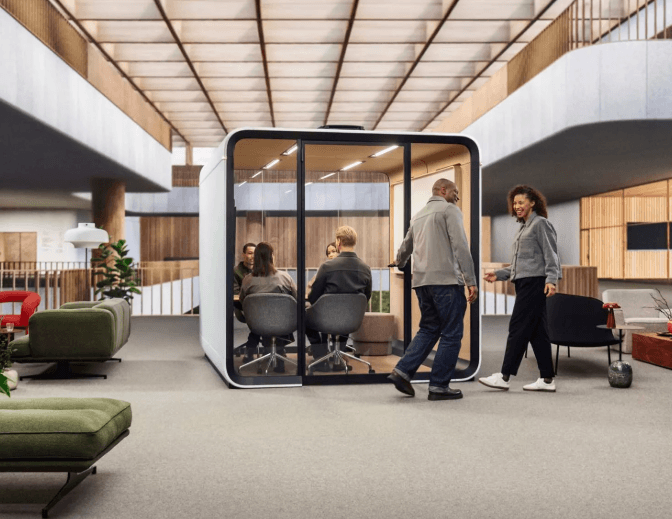
From computer labs and hybrid classrooms to corporate conference rooms and executive boardrooms, low-profile raised floors adapt to the space rather than forcing the space to adapt to them. Training rooms gain flexible data port placement to accommodate shifting group sizes and tech requirements, so a room set up for 20 workstations one week can be reconfigured for 6 breakout pods the next, without rerouting a single permanent cable.
Conference rooms support seamless AV integration and dynamic furniture arrangements, which matters as more meetings mix in-person and remote participants, and the room itself must do more work to keep everyone engaged. Boardrooms maintain a premium aesthetic while accommodating secure data connections and advanced telepresence. Gridd makes data and power systems scalable as executive needs grow, whether that means adding a second display wall or supporting a new generation of conferencing hardware nobody has specified yet.
Across all these settings, the common thread is the same: the floor adapts quietly, so the people using the room never have to think about where the infrastructure is, only that it works.
See also: When to Seek Legal Counsel: Identifying Critical Warning Signs in your Criminal Case
Building Flexible Spaces That Last
Gridd’s low-profile raised flooring system bridges current needs and future demands, turning training rooms and boardrooms into resilient hubs of collaboration and innovation. Gridd eliminates the guesswork in planning for technology that doesn’t yet exist because the underlying infrastructure is built to be reconfigured or moved, not torn out and replaced.
In an era of constant change, adaptable infrastructure isn’t just practical; it’s a strategic advantage. Facility managers who invest in that adaptability now are providing their organizations the flexibility to say yes to the next technology upgrade, the next room redesign, or the next way of working, without dreading what it will take to get there.
To learn more about future-proofing commercial spaces from training rooms to boardrooms, please contact a Gridd Advisor.
[1] Potentially throw in a mention of Gridd Mobile here as well? Leaving this up to you if you think it can fit in seamlessly
[CLD2]done
Tama would prefer we avoid using tile – can we say ‘can lift a section of Gridd’ or something like that.